East Himalaya

Saturday, July 13, 2013

Alternative Arunachal Part 01 (Dree, the indigenous festival of monsoons, rice and changing people)


The application is there with the UNESCO office for recognization of the area with large valleys of rice surrounded by mountains of Bamboo and Pine Sacred Groves as World Heritage Site. The Japanese experts say that the indigenous variety of rice is the highest density known globally. This grows in the Apatani Valley as wet cultivation, with fishes (mainly carps) growing in the water of the rice valleys helping them to grow faster and the bamboo and pine leaves and pine needles of the adjoining hills make the natural compost, fertilizers, insecticides and pesticides for the fields. The communities believe that the secret of this best rice crop of the world is in the sacred groves, where the souls of the ancestors live and are free from human interference. This should not give an idea that the Dree Festival is all about Rice and Fish, which is certainly the daily market, but the festival for me is more of the delicious Dog and Mithun dry meat with lots of black Apong.
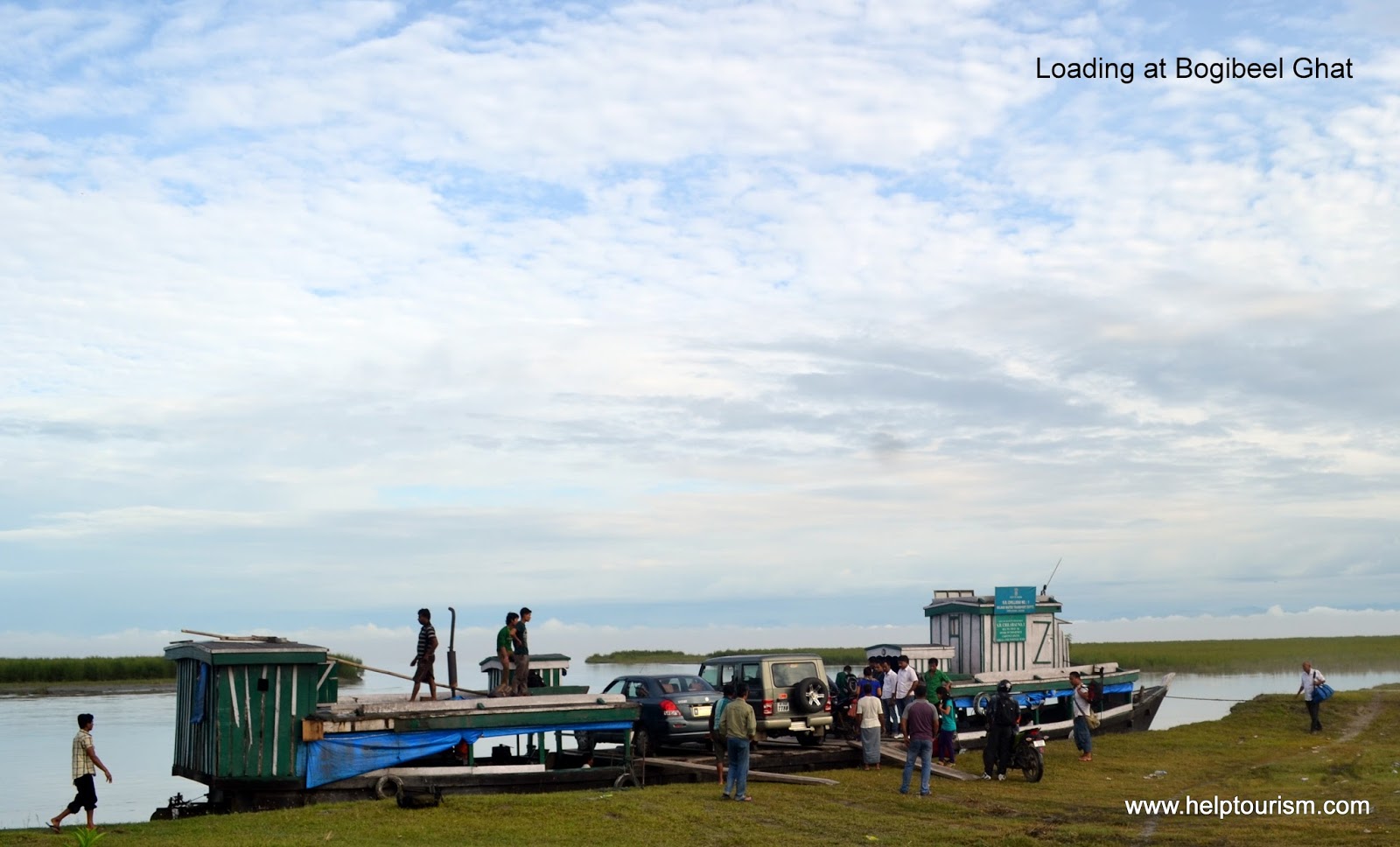
This was not that of a very planned or well thought journey to Arunachal Pradesh. Casually I happened to reach Dibrugarh by Rajdhani Express from Siliguri, after an overnight journey was picked up early morning by Prashanta, the community leader who runs the Dihing River Camp with Help Tourism. Next day, on the 3rd of July, 2013, we ferried over through Bogibeel Ghat, where a 5kms long bridge on 42 pillars is expected to complete by 2015. All these ferries in the Himalaya are a lifetime experience with landscape and people in focus. Sometimes when I see these bridges being built, I feel sad for an endangered Indian ferry culture, which supports thousands of families and brings together diverse communities through their skills. The cost of these bridges could have probably subsidised the ferry culture for the next 02 decades.

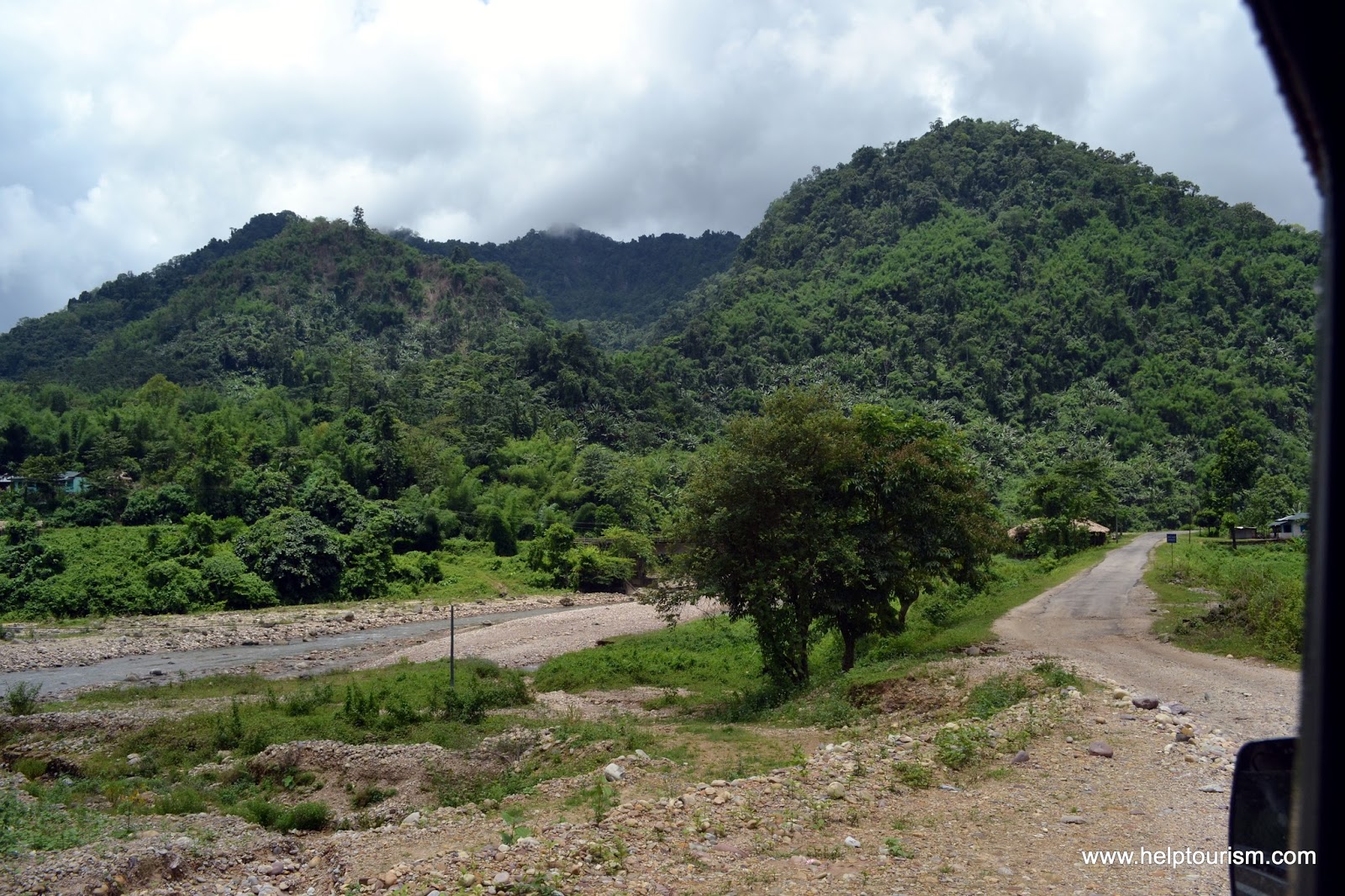
Sorry, I often get carried away with the traditional culture of the rivers which keep people connected to them because of their day to day use. The entry was through the bordering Assam town of Shilapathar and finally driving through the Ego River Valley landscape, where Help Tourism hosts their guests in community camp sites, I reached the Along area for overnight rest. While I was entering through the Leikabil check-post, the Incharge asked me if I was there for the Dree Festival. I suddenly remembered about this main festival of Central Arunachal Pradesh and I left early morning the next day driving through the Subanshiri River Valley reached Ziro late in the evening on 4th July.
First, I must tell you all about the good things that can happen, I met the Ambassadors of Northeast at the Dree Festival at Ziro. Arif Siddique, the famous photographer for representing India’s Northeast through his lively and typically Northeast photographs, Lou Majaw for his globally famous musical voice from Northeast, Tagge Kanno for his understanding of the NGO movement of Northeast at the global level and Asit Biswas the main story builder for National Geographic and BBC Wildlife filming in Northeast were at the festival and we all got together to an extended celebration in the evening.
Though the images will do most of the explanation, but to talk about Dree, it is a festival of borrowing and lending of food grains to balance stock at home and compensated after the harvest. The present fixed day celebration of 5th July was started in 1967 in the Apatani valley of Ziro. Though the festival is more about the Apatani tribe, but it remains incomplete without the participation of the Nyishis and Galongs. The priests and GaoBurrhas in warrior and traditional dresses complete the ceremonies of chicken, egg and mithun sacrifice. The main headgear of the Apatanis, which has been inherited generation after generation has a typical comb whose origin is lost and may be found out through the picture enclosed. This headgear is taken out, prayed and displayed only during the Dree Festival. The fusion of tradition and modern fashion comes with a fine line and the elegance of this balanced fusion is reflected in the entire festival. It is sometimes hard to believe at places like the Apatani valley, which is supposed to be remote can display so much of modern lifestyle too.

As I fly out of the valley with the setting sun in the western sky, I believe that one day I would be flying out further East to the neighbouring countries singing the success of India’s Look East Policy. An opportunity to find the origin of the hair-pin in the Apatani headgear, passed on from one generation to the other since time unknown.




Friday, July 12, 2013

Alternative Arunachal (A Series Dedicated to Indigenous Peoples Week, Aug 5-11)

It is my friend Marcus who motivated me through a post in Google+ to bring in this series for the Indigenous Peoples Week being celebrated for the 2nd year in 2013, between August 5th to 11th. I chose Arunachal Pradesh, a state of India for several reasons, one is the fact that this is one of the states which is described to have a two third population of indigenous population consisting of 26 tribes and more than a 100 subtribes. As copied from Wikipedia The Scheduled Castes and Scheduled Tribes Lists (Modification) Order (1956 and as inserted by Act 69 of 1986) lists twelve tribes of Arunachal Pradesh explicitly, but makes explicit that the list is non-exhaustive by noting that "all tribes of the State, including" those listed are to be considered "Scheduled".
It is not about numbers, but every 20 kilometres that you travel in Arunachal Pradesh, you will find a new group of people adopting their own way in this natural habitat of 84,000 sq kms with a population density less than 20 people per sq km. It was not possible for the Industrial Imperialistic governance under the British Empire to understand these people who followed the culture of BIODIVINITY. Even while explaining the several schools of thought, following the different Teachers or Gurus, Dhamma, the way of life, taught by the teachers in the society were brought under the broad term ‘religion’. In the same way indigenous people who could not be understood were brought under ‘tribe’. The others were called ‘natives’.
It has now been 70 years since the World War II. This area of India’s Northeast, described as an important part of the CBI (China-India-Burma) Theatre was the last happening and noted history of the region. Before this, it is all through stories, culture and habitat, that we can trace some of the untold histories. I have always felt that one of the best ways to explore Arunachal Pradesh is through a journey, where we can avoid the so called known and structured visitor infrastructure of Circuit House/Inspection Bungalow and Hotels/Lodges. The best way because tourism till date did not get an opportunity to flourish and hence the conventional tourism infrastructure has not developed, thereby leaving an opportunity to develop tourism in Arunachal Pradesh in an alternative way with homestays, local family or community run infrastructure of camps/log huts/long houses.
There are 03 main tourism circuits in Arunachal Pradesh, East, West and Central, all approachable through several entry points in Assam, with 02 main hubs in Upper Assam, Tezpur in North Bank and Dibrugarh in South Bank. The most interesting part are the ferries through the Ghats in Assam, which with the fast development of bridges may be an experience only for the next 05 to 10 years, the last ferry experiences in the Himalaya. Till date, because of the lack of bridges lot of Arunachal is cut off for the 03 monsoon months and this probably helps in conservation of several traditional practices. Most of the traditional festivals also take place in the monsoon months.


Tuesday, June 25, 2013

Australia extends its expertise in water resource management to Asia

Floods are probably the most recurring natural hazard or even human development initiated calamity in the Indian subcontinent. The syndrome is mostly seen with the Himalayan rivers. The Koshi River originates in the Tibet (China) and Nepal altitudes, the catchment being given birth by Mt.Everest and Mt.Khangchendzonga. The River finally joins the River Ganga in the state of Bihar, India. We all remember the Koshi Flood of August 2008 and it is said that it is mainly because of the change of course for the first time after 1950. We have all seen the changing courses of the Himalayan Rivers and forming large fans. This is an yearly event, but the mega floods comes once in 50 years or so, like the mega Earthquakes or even Bamboo flowering. In regard to our Rivers, we can be more cautious and responsible scientifically, less interfering in the name of development and more traditional in our respect for the resource. Sometimes there are hopes as we see in this press release:

Canberra, Australia, 25 June 2013 - Scientists from Australia’s national science agency, CSIRO, are applying their knowledge in transboundary river basin management to improve the livelihoods of people living in some of the poorest parts of Asia. CSIRO and its partners have begun work in the Koshi River Basin which stretches from China, across the Himalayas through Nepal and discharges into the Ganges River in India.

The Koshi Basin is home to millions of people who rely on its fertile floodplains for their livelihoods. There is growing pressure to address development challenges in the Basin, in particular population growth and an increasing demand for energy, whilst working within constraints of natural hazards exacerbated by a changing climate, such as floods, drought, landslides, sediment movement and debris flow.

In a collaborative four-year project, scientists from CSIRO’s Water for a Healthy Country Flagship will provide technical assistance to the International Centre for Integrated Mountain Development’s (ICIMOD) Koshi Basin Programme. CSIRO scientists will develop an integrated basin-wide modelling system to improve management of the Koshi River Basin. This system will incorporate information on water availability, freshwater environments and the ecosystem services they provide and social considerations such as the effect of changes in water availability on livelihoods. The system will contribute to development in the Koshi Basin in a socially and environmentally sustainable manner and support national and transboundary water reforms. 

“Australia has a long history of managing a scarce and variable water resource, and sharing this resource amongst competing users,” said CSIRO’s Water for a Healthy Country Flagship Director, Dr Carol Couch.  “There is much the Australian water experience will bring to this project to help improve sustainable development and climate resilience, reduce water stress, and inform water-related decision making and transboundary issues. We will draw on the suite of large river basin assessments undertaken across Australia in recent years, such as the Murray-Darling Basin Sustainable Yields assessment.

“Research will be undertaken as a partnership between Australian organisations and ICIMOD researchers, based in Nepal. We will also be learning from ICIMOD, particularly in relation to sediment movement, snow melt and glacial processes,” said Dr Couch. 

“At ICIMOD, we have taken a long-term, transboundary approach to support river basin management. This includes testing, piloting, and monitoring the innovations needed to address common issues related to climate change, cryosphere, water resources management and livelihood promotion,” said Dr David Molden, Director General of ICIMOD.

“The Koshi Basin Programme will provide a platform for national and international researchers and decision makers to come together to promote transboundary cooperation and integrated water resource management practices and policies. This will also include the development of measures for risk management as well as equitable access to water for energy and food security,” said Dr Molden.

Work undertaken by CSIRO this year will consist of a review and analysis of the existing knowledge base, capacity building and the development of a prototype model for the Koshi River Basin that incorporates information on water, climate, hydropower, freshwater environments, irrigation and social issues including poverty alleviation. The knowledge gained from this project will culminate in the development of a robust integrated basin-wide modelling framework, using eWater’s hydrological modelling platform, Source.
Project partners
This work is supported by the Australian Agency for International Development (AusAID) through the Sustainable Development Investment Strategy. Through the Strategy, AusAID works with a portfolio of partners to address the challenges of water, food and energy security in South Asia.
The International Centre for Integrated Mountain Development (ICIMOD) is a regional intergovernmental learning and knowledge sharing centre serving the eight regional member countries of the Hindu Kush Himalayan region – Afghanistan, Bangladesh, Bhutan, China, India, Myanmar, Nepal, and Pakistan. 

Monday, June 24, 2013

Himalayan Tourism in India, today’s journey with sorrows and joys

The 03 day state mourning declared by the Uttarakhand Government came to an end day before yesterday. Several roads have opened and the Indian Forces, mainly ITBP is in the forefront of the entire rescue operations. The legendary Kedarnath Temple Complex, which had grown into a small town, along with the lower areas like Govindghat, Rudraprayag etc, has seen thousands stranded and hundreds missing. Every soul connected to the Indian Himalaya is heartbroken and many of them have reached the disaster areas to support rescue and relief.
Those who live in the East Himalaya will remember the Himalayan Earthquake in Sikkim on 18th September, 2011, the disaster which has still to heal up. Official report says that pilgrims will not be able to pay their homage to Kedarnath for the next 03 years. All this is probably due to too much interference of human beings to capture the Indian Himalaya in the name of development. If we look closely, most of the disaster is based around the water bodies, lakes and rivers, the source for the entire country. Water is nature’s strongest factor; water has the capacity to cut rocks and create gorges or even flood large landscapes. Water is the life maker.
We in India have regarded all the Himalayan Landscape as the “Abode of the Gods” or the “Sangrila”. We prayed to every bit of nature as our providers for all we have to live and have never lived as “masters of nature”, a human culture which in greediness of economy has forgotten the necessity of social and environmental aspects of life for sustainability. We still have the time to go to the Himalaya, which is almost 16% of total India’s area with about 73% of the Himalaya being in India. A close survey will show that almost 100 districts in 12 states of India are under the Indian Himalaya. The states are Arunachal Pradesh, Assam, Meghalaya, Mizoram, Nagaland, Manipur, Tripura, Sikkim, West Bengal, Uttarakhand, Himachal Pradesh and Jammu & Kashmir.

The idea of 06 states in the Indian Himalaya was considered for many years, till several scientific organizations like the ICIMOD, GB Pant Institute, Indian Mountain Initiative, GTZ etc concluded that the Indian Himalayan Region (IHR) spread across 10 states fully and 02 states partially with a total area of 500,000 sq kms between latitudes 26o20’ and 35o40’ North, and between longitudes 74o50’ and 95o40’ East. Asia today holds the largest, highest and most populated mountain system, the Hindu Kush Himalayan system, which was formed because of the collision of India and Eurasia during the plate movement about 50 million years ago. This also became the first land based trade route to connect continents, popularly known as Silk Route. Along with trade, the culture of the people moved and religiously the Himalaya became the “Pavitra Bhumi”, the holy or the sacred land as the nearest meaning.

Both trade and religion brought thousands and millions of visitors to the Himalaya. Some made it a point of their transit, some settled down and many migrated across passes following the rivers. This millennium is dedicated to tourism, the philosophy of travel that binds the guest and host community. With the strong lobbying of the ATOAI (Adventure Tour Operators’ Association of India), headquartered at New Delhi, the Minister of State with Independent Charge of Tourism, Government of India, Dr.K.Cheeranjeevi has announced the campaign “777 days of the Indian Himalaya” on the 20th of June, 2013. The mission as he explained is promoting ‘Incredible Indian Himalaya’ to attract International tourists during lean season and reminding the world that 73% of Himalaya is in India.
The regional tourism associations also have decided not to miss the bus, Travel Agents Association of Bengal (TAAB) with its headquarters in Calcutta and Eastern Himalayan Travel and Tour Operators Association (EHTTOA) with their headquarters at Siliguri have got together for the Himalaya 02 days ago. Based on the invitation of the Principal Secretary of West Bengal Tourism to ATOAI, to hold their annual convention in West Bengal, the 02 associations have decided to use the occasion to promote Siliguri as the Adventure Base Station for the East Himalaya Region, which includes the entire Northeast India and parts of South and Southeast Asia. Also, West Bengal being the largest source market for tourism in the Indian Himalaya, the 02 associations wishes to open a dedicated “Rescue and Relief” cell for visitors to the Himalaya.
Better places for people to live in and visit, can we not elaborate, Host to make a better home in the Himalaya and the Guest to make it better through visit. Here ‘better home’ is a perfectly conserved Himalayan Destination and the role of the visitor is through a missionary journey of how the same can be conserved for better. Yes, every person concerned to take up the responsibility. A process where we should know how to take responsibly from the Himalaya, as Himalaya is here to give and contribute. The eldest Pandava brother, Yudhistir in Mahabharata, after completing the post death ceremonies for all relatives and friends he had lost in the War of Kurukshetra, left his Kingdom, left all his joys and sorrows back and left for Mahaprasthan, the eternal journey to the Himalaya, accompanied by his brothers and wife. While on your journey to the Himalaya, leave all that you have which makes you feel like a king, as you should be prepared to receive more during your visit.
Many a campaigns are undertaken, but for the tourism campaign to the Indian Himalaya should be more inclusive. Several extraordinary campaigns like the UN campaign on water etc have to be included in the initiative through institutionalization. Ending here with a proposal of an immediate need to form a ‘Himalayan Tourism Resource Foundation’ with the initiative of ATOAI and India Tourism. The same to be partnered by as many organizations as possible. TAAB and EHTTOA to start with the Bengal chapter of the same. The Foundation to support research for right tourism products for the Himalaya, promote the same, support capacity building, support responsible destination campaigns, develop a rescue and relief cell, develop opportunities of International Cross-Border tourism and be the guiding force for the right kind of tourism in the Indian Himalayan Region. 


Wednesday, May 29, 2013

Everest Day & India the home for adventure in Himalaya


Lieutenant Colonel William Lambton was the Superintendent of the Trigonometric Survey of India which he started in 1806. Much later he was succeeded by Colonel Sir George Everest, who was the Surveyor General of India from 1830 to 1843, who continued the work and extended the same from South of India to Nepal in the North, following the Meridian Arch, covering a distance of 2400 kms. He was immediately succeeded by Major General Sir Andrew Scott Wagh, who had in his office Babu Radhanath Sikdar, a Derozian who was known for his knowledge in mathematics was picked up by Sir George Everest himself, when Radhanath was only 19. In 1852, Radhanath had pointed out to Andrew that ‘Peak XV’ behind Mt.Khangchendzonga was the highest peak of the world. It was only in 1856, Andrew Wagh decided to announce the finding and proposed it to be named after his Boss, George Everest.
Everest himself had a lot of objections against naming the peak after him, as he himself had passed an order that the peaks to be named after the local names available. Radhanath’s work was never recognized the way it should have been. The politics of the highest peak continues even today. After 60 years of the first climb on Everest on this date by Tenzing Norgay and Edmund Hillary, people still discuss about who climbed first and not about the fact the great feat of the Tenzing Hillary, his nurture and respect in Darjeeling in India, even being born to a Sherpa family in the Thengbuche, Khumbu in Nepal. A comment of Tashi Tenzing, the Grandson of the Great Mountaineer, as published in The Telegraph from UK shows
Mr Tenzing, 49, said: “I think my grandfather should have been knighted. He was a member of the expedition, not just a Sherpa.
“They just gave him a bloody medal.”
Today’s anniversary would provide a good opportunity for "a gesture from the Queen and the people of England to recognise that my grandfather was the man who took their flag to the summit," he argued.
The lack of official recognition that Tenzing allegedly suffered has been attributed to prejudices in the British establishment at the time.

How could he be knighted as a citizen of India, which was then an independent country. Talking about his citizenship then, when he was asked to which country did he belong, the simple man but the Great Climber replied that Nepal is my mother who gave me birth, but India is my mother who looked after me. Regarding the flag to the summit, he took a few things to the summit, one is a blue and red pencil, which a small girl Nima from the Sherpa Busty in Darjeeling had given her and the other was the ice axe with four flags: UN, Britain, Nepal and India, the last given to him by his friend Rabindranath Mitra, the owner of a printing press in Darjeeling. (Ref: the column by Gautam Chakraborty published in ABP today).
My close friend, Tsering Wange was the first person to promote Adventure Tourism from Arunachal Pradesh in India’s Northeast, this I think was about 15 to 18 years ago. On May 18th, 2013, Anshu Jamshenpa, his wife reached the summit for the third time. Anshu, mother of 02 daughters had climbed the Everest twice in 10 days, 12th and 21st of May, 2011, the only of its kind World Record. She was awarded the ‘Adventurer of the Year 2011’ by the ATOAI (Adventure Tour Operators’ Association of India) at their 9th Annual Convention held in Srinagar, Jammu &Kashmir, India. 16 year old Nameirakpam Chingkheinganba from Manipur is the youngest Indian to be at the top of the summit was with Anshu this year. Tarun Saikia of Assam, David Zomanghaiha from Mizoram and Wangsuk Myrthong from Meghalaya were also the first from their respective states to climb the Everest with Anshu.
Chanda Gayen from West Bengal made to the summit on the same date and is third woman from the state of India to make it after Kunga Bhutia from Darjeeling in 1994 and Shipra mazumdar from Murshidabad in 2004. Her team mates Ujjal Ray, Debdas Nandy and Tushi Das also made to the summit. Tushi sells eggs in the local market to run the family and nurture the passion of mountaineering. All four from very middle class families or so to say poor families could make to the top because of their dedication and hard work, but above all the adventure culture in India. The adventure clubs and associations spread across the small and big towns and cities of India are the motivating house for young Indians.
The trend in India was always there, but not as western mountaineering, but the great pilgrimages to the Himalaya, known for hundreds of years in India. The facts, myths and stories of the sacred footfalls in the Himalaya are never ending...

Monday, May 13, 2013

Mango Festival at Siliguri on 7th, 8th & 9th June

Dear all,

We are back. Forced to take a breather in 2012 due to unavoidable circumstances, we are back on track to present you the MCCS Gitanjali Mango Festival 2013, the one of its kind event held annually since 2010 in these parts of the country.

If relentless inquiries from participants and patrons on the 2012 hiatus stimulated us into re-organising the festival this year, the opportunity to uphold the cultural heritage mankind has woven over the years along with the scope to showcase hidden talents is incentive enough for us to decide, the show must go on..

And so, here we are additionally offering you the juicy prospect to slurp, sample and sink your teeth into that mother of all pulps – the mango fruit.  

GENESIS

The festival is being organized by Modella Caretaker Centre and School (MCCS) using mango, the National Fruit as a medium for inheritance of heritage by the Generation Next. In 2010 the festival was dedicated to the 150th birth anniversary of the 1st Noble Laureate of India, Gurudev Rabindranath Tagore.

Poet, painter, social worker all rolled in one, Gurudev confirmed conservation of the rich Indian heritage for the future generation, hence the nomenclature, ‘Gitanjali’ Mango Festival’ linking the event with his namesake collection of works.

Tagore’s association with mango is legendary. His philosophy, which was institutionalized into education form through the International University, Viswa Bharati at Shantiniketan was set up by his father, Maharshri Debendranath Tagore in 1863. The fledgling centre took off in two rooms in a mango orchard. Shantiniketan inmates often referred to Gurudev’s love for mango, which also reflects in his works ‘Gardener’, ‘Kabuliwala’, etc.

Mango has lured even the sages and kings of this great country. Legend has it that Lord Gautama Buddha, the first known person to have spread Indian heritage globally, had a taste for the fruit so much so that famous dancer Amrapali had offered him a mango orchard at Vaishali, during his travels. Mughal emperor Akbar also was a mango connoisseur. No wonder, mango these days is a sought after gift in diplomatic circles. Just goes to show the fruit is irresistible.

The mention of Mango in India goes back to 2000 BC in the Upanishads. Mango grows uniformly across the tropics of Asia, but the fruit’s association with this country is linked with its cultural heritage. It is argued that the fruit originated from India’s Northeast and the wild variety is said to have been found in Mizoram and Arunachal Pradesh.

PRECEDENT

What began in 2010, flourished in 2011. Fresh ideas were incorporated and the Association for Conservation & Tourism (ACT) organized a Rural Tourism Bazaar, the first of its kind of activity, highlighting conservation of the rich rural heritage to a special kind of livelihood process called tourism. This event organized by ACT received much appreciation from neighbouring states and countries.

The Festival saw mango growers from across West Bengal flock in with their most possessed and prized products. The Mango Bazaar with commercial varieties from across India and events like Mango Eating and Recipe Competitions proved heavy crowd pullers. Students participated in Sit & Draw, Ethnic Dress, Face of the Day, Live Radio Quiz, cultural programmess etc and the evenings were a blend of cultural soirees, workshops, seminars and lectures on several heritage mediums.

The 2011 Festival and its venue were complimentary to each other. The name of the venue also sourced from the works of Gurudev Rabindranath Tagore, Uttarayon believes on the principles of conservation of Indian heritage. At the micro level, it was The Orchid Restaurant at Uttarayon which hosted the festival in 2010 and 2011. In the process, a mango orchard ‘Amrakunja’ dedicated to mango has developed at the site. Since then, the venue has developed into one of the most impressive centres in North Bengal and Sikkim.

NOW

The Mango Festival slipped up in 2012 due to unavoidable circumstances. But, if the organizers believed people had forgotten the festival dedicated to mango, they were horribly wrong. The first shout came from the mango growers. The cry grew louder as people and organizations related to heritage conservation, members of the student community and conservation crusaders picked it up. The appeal was strong enough for the organizers MCCS and hosts Uttarayon to yield to the demand. The die is now cast and we are back to organizing the third MCCS Gitanjali Mango Festival, 2013 at City Centre, Uttarayon, Siliguri on 7th, 8th and 9th of June.

The Festival this year would be dedicated to Swami Vivekananda to commemorate his 150th birth anniversary. Vivekananda re-introduced Indian heritage to the modern world.

Now comes the best part. Since the mango growers have discovered that the MCCS Gitanjali Mango Festival is more of their baby, they have decided to bring plenty of the fruit with them for the Festival visitors to take away.

This year, participants of the Mango Eating event will compete in 03 categories: Male, Female and Couple. Since there is a great rush for enquiries, the organizers have decided to accept names registered IN ADVANCE ONLY. Three additional prizes 1) Best Female Mango Fashion, 2) Best Male Mango Fashion and 3) Best Couple Mango Fashion; would be introduced to the Festival this year.

‘’Best Mango Friends Group’’ award to a group of minimum 10 friends with Mango Fashion would be awarded on each day of the Festival. Mango Recipe Competition and classes for Mango Cookery would be held on all three days of the Festival at The Orchid Restaurant.
Interested participants have to register IN ADVANCE. The participants have to send sms in the following order:
1)    Mango Eat - name in full to 9733005437.
2)    Mango Cook - name in full, date interested (7th, 8th or 9th) to 8420146585.
3)    Mango Grow - name in full, name of place of residence (like Malda or Murshidabad or Uttar Dinajpur etc) to 9733005437.
4)    Mango Fashion - name in full to 9007168540.
5)  Those interested in Mango Dinner on 7th, 8th or 9th June, 2013 please book through sms ‘Mango Meal Date (7th, 8th or 9th)’and send to 8420146585.
6)    Any organization or individual interested in any activity or event with theme Mango can call 9733005439.
7)   Anyone interested in ACT Rural Tourism Bazaar can call 9733000444.

The ACT Rural Tourism Bazaar will offer to demonstrate models, provide counselling sessions for setting up Rural Tourism projects and provide information to interested travellers on the various Rural Tourism Destinations of East and Northeast India, Nepal, Bhutan, Bangladesh and Myanmar.

Take away travel books by popular authors from North Bengal and Sikkim would be available at the event. Rural Tourism Festivals would be highlighted and the ‘’ACT Teesta Awards’’ will be declared for the Best Initiatives in the Teesta Landscape. Proposals are requested to be sent to act.easthimalaya@gmail.com by the 29th of May, 2013.
    
Several people and organizations are committed towards preservation of society, environment and culture. The Festival will showcase many such works including animal welfare, people welfare, livelihood options, cultural conservation, weaving & crafts, heritage, sky watching, climate change etc.

A special event on the ‘’2013 UN Year for Water Cooperation’’, a complete musical seminar  and documentary, based on the theme ‘Teesta Parer Katha’ would be presented at the Festival in addition to the regular cultural shows promoting folk culture.

Let us mango!!


Wednesday, April 3, 2013

Brajbhumi Manipur

We are all very attached to the full moon nights across India, but look at this ‘Full Moon’ which is very special, across the country, and this is known as ‘Dol Purnima’ or ‘Holi’, the famous festival of colours. There is a call for celebration with a one day National holiday to a month long celebration in some states of India. Special food, drinks, colours and sometimes religious celebrations by mainly the followers of the Vaishnovite sect of the Hindu religion are the major ways of being involved. In India, the celebrations of colours go beyond religions and stand as an event of National Integration.
There is one place where the celebration pattern has not changed for ages, even in the people who are involved find peace in the traditional way which was being followed by Chaitanya Mahaprabhu and this is in the valley of Manipur. The valleys and hills of Manipur, an extension of the East Himalaya, separate the Brahmaputra River from Chindwin River in Myanmar. The Manipur River and the Barak River, though originate from the Northern limits of the Manipur Hills, they follow 02 different alignments, with the Manipur River flowing with all her tributaries to create the largest fresh water lake, the Loktak Lake.
The exit from the lake continues through many rivers and rivulets which finally flow into the Chindwin River. The Meitei, Shan and Ava people traditionally collected GOLD from the floors and beaches of Chindwin River. A large area around the Chindwin River was often ruled by the Manipuri kings. There is one thing that is found common in Manipur and Myanmar, the religious roots and traditions of the people and the way they have not changed with time when it comes to religious practices and celebrations, nor there are any symptoms of changing their cultures in the recent future. The religion can be Vaishnovite Hinduism or Theravada Buddhism, the trend in the people remains the same.

Being a part of this celebration, we felt like living the days which are lost in Brajbhumi (also sometimes refers to Nandgaon-Barsana) and Nabadwip. From the villages of Loktak to the town of Imphal, men and women, old and young, all alike celebrated the Festival in a wonderful inherited discipline. The schools celebrated with annual sports, cymbals-drums-songs in community rhythm, burning the huts and dancing in the streets are some lifetime experiences. The major experience was the Manipuri food of the valleys, which are very elaborate, the main meal called ‘Chak-Lu’, where the staple food rice is called ‘Chak’ and the rest of the ‘Lu’ consists mainly of Nathomba (Fish Curry), Sinju (Salad),  Haithomba (Olive Chutney), Eronba (Banana Stem inside vegetable), Maroithomba (Groundnut curry) and many more items.
We did not want to miss our old Myanmar experience of Tamu food, which we had while we visited Tamu from Mandalay via Kaley Myo last year. The Pork curry, rice, lettuce salad, chilly pickle etc, all seemed to remain the same. We did not stop ourselves from buying the famous Bamboo woven caps and baskets again. The continuity of the hearts of people, the land based connectivity, the geographical continuity, the search for gold... all have been there through generations, but separated by the capitals at New Delhi and Yangom. For more than 20 years now that we have been hearing that our Moreh-Tamu, Indo-Myanmar border will be opened, simplified with visa at borders, and with the present New Delhi-Yangon good relations and India’s Look East Policy, the promise continues, but only restricted to a few car rallies.
The western world has declared ‘Myanmar Open’ and hoards of tourist are visiting Myanmar. Still not a budget destination, Myanmar is prepared with tourism infrastructure and services with value for money. The quality tourist flow to Myanmar will supersede India in the next 05 years. Here is an opportunity for New Delhi to act on her ‘Look East Policy’, to open the border for tourism with visa on arrival at the border and make India’s Northeast the Gateway for India from Southeast Asia. This is the need of time when ASSOCHAM, the oldest trade and industry body of India has declared that ‘Foreign Tourist flow to India has significantly dropped by 25% in the last 03 months alone’. The land is the same and so are her people living along the borders, a Indo-Myanmar Friendship Road can only benefit with better people to people relations and not by closed border, restricted trade and symbolic rallies.